
How to Remove Yellow Sweat and Deodorant Stains from Shirts
17 November 2026 · 5 min read
Key takeaways
- Sweat itself is mostly clear. The yellow comes from sweat proteins and body oils reacting with the ingredients in antiperspirants and deodorants, then building up in the fabric.
- The most reliable fix is an oxygen-based stain remover (sodium percarbonate) or an enzyme detergent, left on the stain for 30 minutes or overnight, then washed.
- Avoid chlorine bleach on yellow underarm stains, because it can react with the proteins and make the yellow worse. Avoid heat until the stain is gone, because dryers and hot irons set it.
- Prevention beats removal: let deodorant dry before dressing, wash shirts after each wear and treat the first sign of yellowing early.
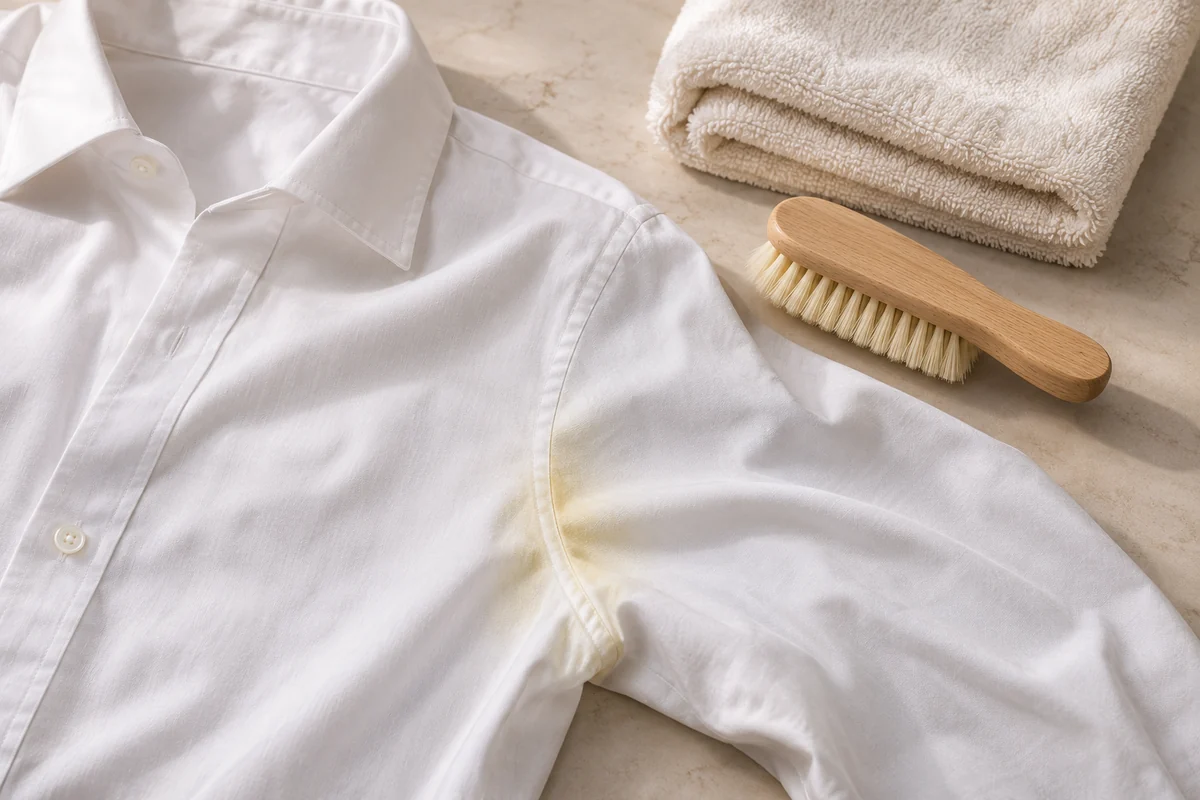
Few things ruin a good white shirt faster than a pale yellow patch under each arm. The shirt is clean, it smells fine, and yet the marks refuse to shift. The good news is that most yellow underarm stains can be removed, as long as you use the right method and avoid the common mistakes that set them for good.
Why shirts turn yellow
Fresh sweat is mostly water, and it does not stain a shirt on its own. The yellow comes from a chemical reaction: proteins and oils in sweat meet ingredients in antiperspirants and deodorants, particularly aluminium compounds. The reaction leaves a residue that sinks into the fibres, and every wear and wash adds a little more until it becomes visible. That is why the marks often appear on white and pale shirts after months, not after one wear.
What you need
- An oxygen-based stain remover (sodium percarbonate) or an enzyme laundry detergent.
- Baking soda, white vinegar and water for lighter marks.
- A soft brush, such as an old toothbrush.
- A bowl or basin for soaking.
Step by step: removing a yellow stain
- Rinse the area in cold water. This clears loose residue and prevents the stain from setting.
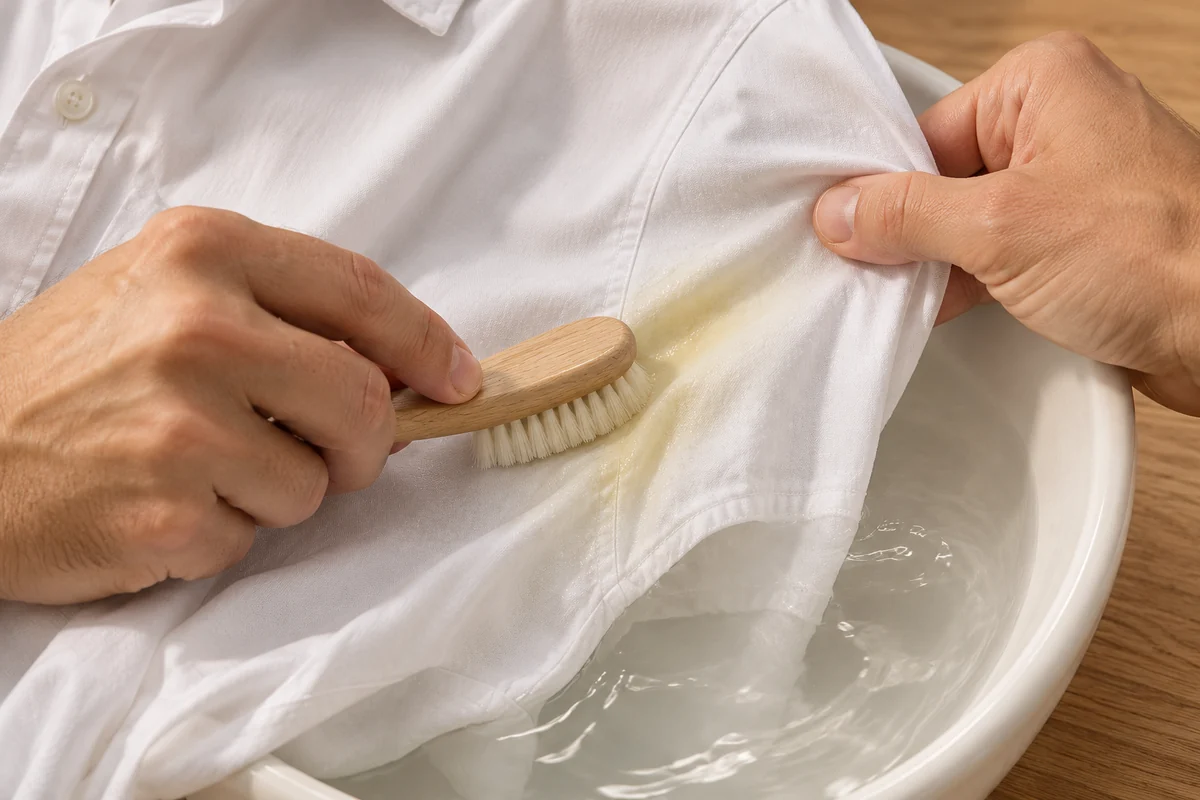
- Pre-treat. For white cotton, dissolve oxygen-based stain remover in warm water following the pack instructions and soak the stained area for 30 minutes, or overnight for older marks. For lighter marks, rub in a paste of baking soda and water, or sponge on a mix of half white vinegar and half water.
- Brush gently. Work the product into the fibres with a soft brush, using small circles, without scrubbing hard.
- Wash. Use an enzyme detergent at the highest temperature the care label allows. Our guide to laundry care symbols explains what the label permits.
- Check before drying. If any yellow remains, repeat the treatment. Heat from a dryer or an iron will set whatever is left.
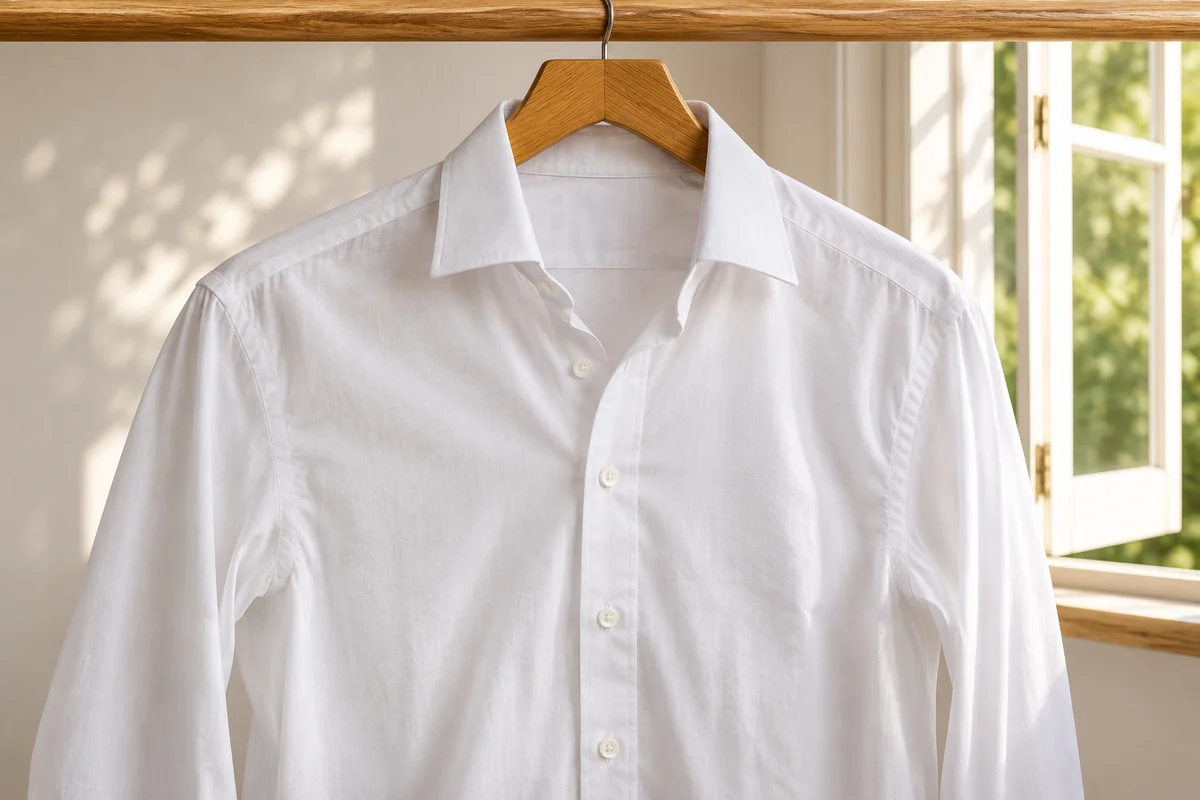
- Air dry. Hang the shirt on a wide hanger. See our guide on washing and drying dress shirts for the best method.
What to avoid
- Chlorine bleach. It can react with sweat proteins and make the yellowing worse, and it weakens cotton.
- Hot water on a fresh stain. Start cool and work up, because heat can set protein stains.
- The dryer or iron before the stain is gone. Heat fixes it.
- Mixing cleaning products. Never combine bleach with vinegar or other cleaners. Use one product at a time and rinse in between.
- Using colour-fast tests as an afterthought. Test any product on an inside seam first, especially on coloured shirts.
How to stop it coming back
- Let deodorant dry. Wait a minute or two before dressing, and use a thin layer. Thick layers leave more residue.
- Wash after every wear. Residue left in the fibres builds up and sets.
- Rotate your shirts. Wearing the same one two days running leaves less time to air and recover.
- Treat the first sign. A faint mark is much easier to remove than a deep yellow one.
- Try a different product. If marks keep returning, switching antiperspirant formula can help.
When the shirt is beyond saving
Old stains that have been through many hot washes and dryers may only fade. If the fabric is now stiff or discoloured, replacing the shirt can be the better route. The Standheld shirts are made to be easy to wash and wear again, and our guide to how long it takes to iron a shirt shows what a quick routine looks like.
Frequently asked questions
Why do shirts get yellow stains under the arms?
Sweat is mostly water and does not stain by itself. The yellow marks come from proteins and oils in sweat reacting with ingredients in antiperspirants, especially aluminium compounds, and building up in the fabric over repeated wears and washes.
What is the best way to remove yellow sweat stains?
Pre-treat with an oxygen-based stain remover or an enzyme detergent, leave it for 30 minutes to a few hours, then wash at the highest temperature the label allows. Repeat if the mark is still visible before drying.
Does baking soda remove sweat stains?
It can help with fresh or mild marks. Mix baking soda with a little water into a paste, rub it into the stain, leave it for about 30 minutes, then wash. For older stains, oxygen bleach works better.
Can I use white vinegar on sweat stains?
Diluted white vinegar helps loosen deodorant residue. Mix equal parts vinegar and water, sponge it onto the stain, wait 30 minutes, then wash. Rinse well and test on an inside seam first.
Should I use chlorine bleach on yellow stains?
No. Chlorine bleach can react with sweat proteins and deepen the yellow, and it can weaken cotton fibres. Use oxygen-based bleach on white cotton instead, and only where the label allows bleaching.
Why did the stain come back after washing?
Usually because residue was still in the fibres, and heat from the dryer or iron set it. Always check that the stain is gone while the shirt is still wet, then dry it. If it remains, repeat the treatment before applying any heat.
How do I stop yellow stains from forming?
Apply a thin layer of antiperspirant and let it dry fully before putting the shirt on. Wash shirts after every wear, rotate them, and consider an undershirt. Treat early yellowing before it builds up.