
Ironing Temperature Chart: The Right Heat for Every Fabric
17 November 2026 · 5 min read
Key takeaways
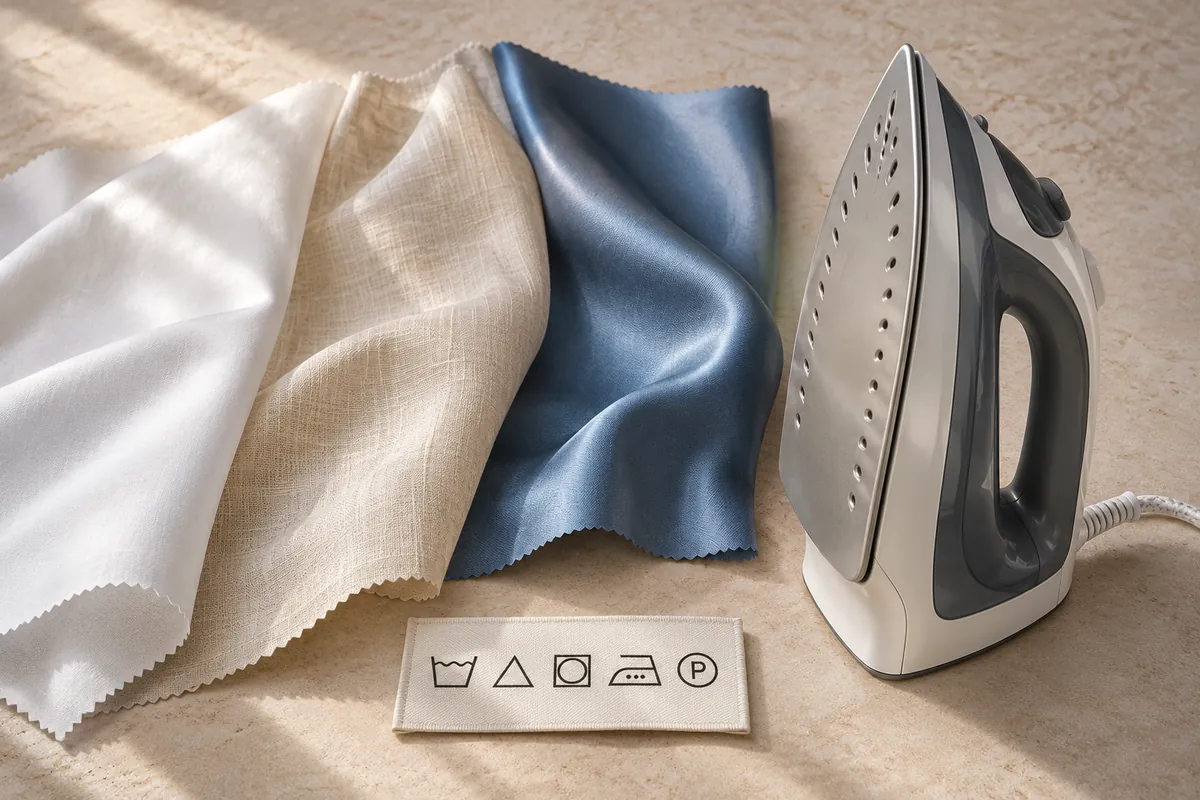
- The dots on the care label are the answer: one dot is up to 110 °C, two dots up to 150 °C and three dots up to 200 °C.
- Cotton and linen take three dots. Wool, polyester and viscose take two. Silk, nylon, acrylic and acetate need one dot.
- For a blend, always follow the most delicate fibre in it.
- No label? Start on the lowest heat, test on an inside seam and increase gradually. Ironing too hot cannot be undone; ironing too cool just takes another pass.
The iron has a dial full of numbers, dots and fabric names, and every garment has a label that says something slightly different. Get it wrong and you will either waste time on a stubborn crease or leave a shiny, scorched or melted patch. This chart gives you the right heat for the common fabrics, and explains how to read the label when it differs.
What the dots mean
| Symbol | Maximum heat | Typical fabrics |
|---|---|---|
| ● (one dot) | 110 °C / 230 °F | Silk, nylon, acrylic, acetate, elastane |
| ●● (two dots) | 150 °C / 300 °F | Wool, polyester, viscose, blends |
| ●●● (three dots) | 200 °C / 390 °F | Cotton, linen, denim |
| Iron with a cross | Do not iron | Some delicate or coated fabrics |
| Iron with a cross under it | No steam | Silk, some synthetics |
Ironing temperature by fabric
| Fabric | Heat | Notes |
|---|---|---|
| Cotton | Up to 200 °C (3 dots) | Iron damp or use steam. Dress shirts press best slightly damp |
| Linen | Up to 200 °C (3 dots) | Iron while damp, on the wrong side for a smoother finish |
| Wool | Up to 150 °C (2 dots) | Use a pressing cloth and steam. Never press dry |
| Polyester | Up to 150 °C (2 dots), often 110 °C | Wrong side. Keep the iron moving |
| Viscose / rayon | Up to 150 °C (2 dots) | Low steam, on the wrong side. Can water-mark |
| Silk | Up to 110–150 °C (1–2 dots) | Wrong side or with a cloth. Do not steam directly unless the label allows |
| Nylon | Up to 110 °C (1 dot) | Low heat only. Melts easily |
| Acrylic | Up to 110 °C (1 dot) | Low heat, a cloth and little pressure |
| Acetate | Up to 110 °C (1 dot) | Wrong side, no steam |
| Denim | Up to 200 °C (3 dots) | Heavy, so it needs steam and time |
Blends and missing labels
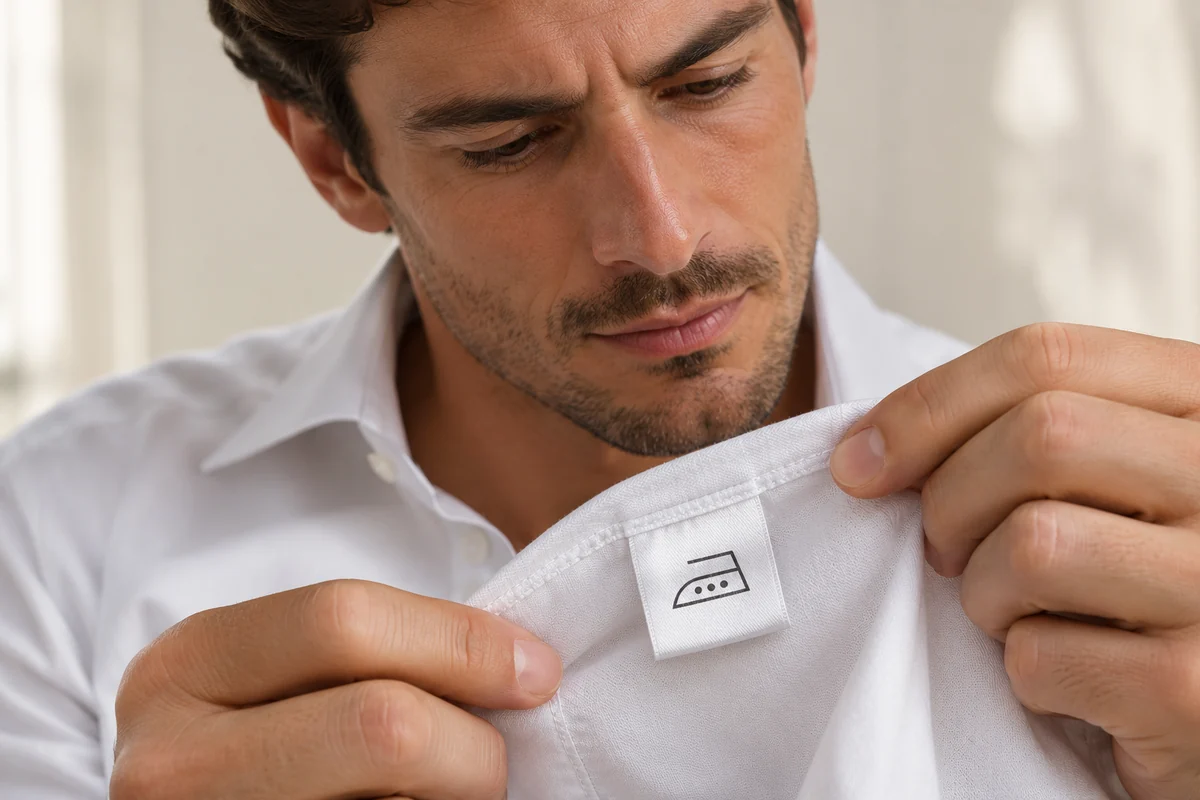
For a blend, follow the most delicate fibre, so cotton with 30% polyester gets two dots, not three. If a label is missing, identify the fabric by feel or ask where you bought it. When you cannot tell, start on the lowest heat, test on an inside seam or hem and raise it step by step. A thin cotton cloth between iron and garment lets you use a little more heat safely.
Tips for better results
- Heat the iron fully. The setting is only reached when the indicator light goes out.
- Start with the lowest-heat items. Silk and synthetics first, then wool, then cotton and linen, so you never wait for the iron to cool.
- Use steam rather than more heat. Steam relaxes creases without raising the plate temperature.
- Press, do not drag. This avoids shine and stretching.
A gentler route
If you spend more time adjusting dials than ironing, an automatic machine takes the temperature decision out of it. It offers cool, 50, 60 and 70 °C settings, and our guide on ironing a dress shirt by hand shows the order of work for comparison. For everyday shirts, a non-iron Standheld shirt needs the iron much less often.
Frequently asked questions
What do the dots on an iron symbol mean?
They show the highest safe temperature: one dot is up to 110 °C (230 °F), two dots up to 150 °C (300 °F) and three dots up to 200 °C (390 °F). An iron with a cross through it means do not iron. A cross under the iron means no steam.
What temperature should I iron cotton at?
Cotton takes the highest setting, up to 200 °C (three dots). It irons best slightly damp or with steam.
What temperature for a polyester shirt?
Usually two dots or fewer, up to 150 °C, and often one dot (110 °C) for thin or stretch fabrics. Iron on the wrong side and keep the iron moving, because synthetic fibres can melt or shine.
Can I iron silk?
Yes, but on a low setting, usually one to two dots, on the wrong side or with a pressing cloth. Many silks should not be steamed directly because water can mark them. Always follow the label.
What if the care label is missing or unreadable?
Identify the fabric if you can. If not, start on the lowest heat, test on an inside seam or hem and raise it gradually until creases relax. Use a thin cotton cloth between the iron and the fabric for safety.
What temperature do I use for a cotton-polyester blend?
Follow the more delicate fibre, so for most cotton-polyester blends use two dots, up to 150 °C. A pressing cloth and steam help the cotton relax without overheating the polyester.
Why does my iron leave shiny marks?
Shine appears when heat and pressure flatten the surface of dark, synthetic or wool fabric. Iron on the wrong side, lower the temperature or use a cloth between the iron and the garment.