
Poplin vs Twill vs Oxford: Shirt Fabrics Compared
17 November 2026 · 5 min read
Key takeaways
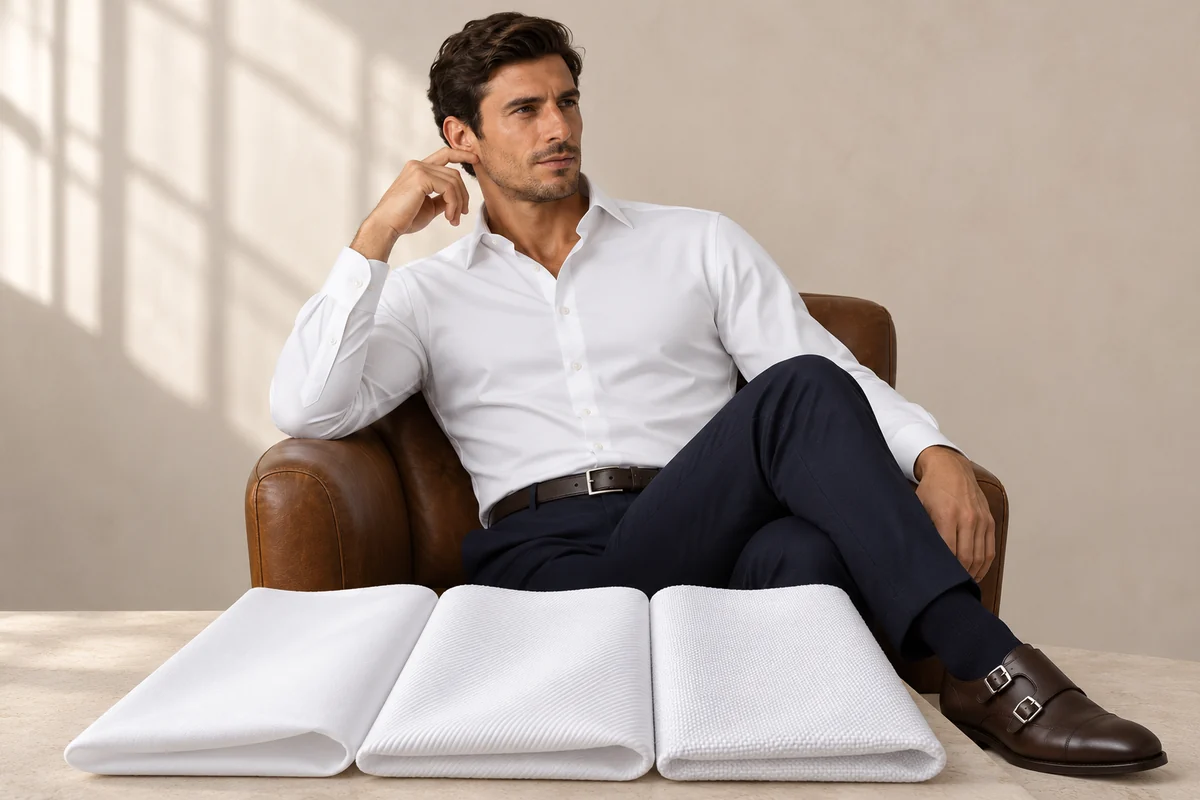
- The difference is the weave. Poplin is smooth and crisp, twill has a diagonal texture and drapes softly, Oxford is thicker and textured.
- Poplin is the most formal and lightest, but it creases most easily. Twill hides creases better. Oxford is the most casual and hardwearing.
- For the office and formal wear choose poplin or fine twill. For everyday and weekends choose Oxford. For hot weather, light poplin.
- These are woven fabrics. Knitted shirts, such as the Standheld non-iron shirt, are made differently and handle creases differently.
Shirt descriptions are full of fabric names that sound similar and are not. The three you will meet most often are poplin, twill and Oxford. They are all usually cotton, but they are woven differently, and that changes how they look, feel and crease. Here is the short version, then the detail.
At a glance
| Poplin | Twill | Oxford | |
|---|---|---|---|
| Weave | Plain, tight | Diagonal ridges | Basket weave |
| Feel | Smooth, crisp, light | Soft, drapey, slightly heavier | Textured, thicker |
| Look | Flat and clean | Subtle sheen and diagonal lines | Matte, visible texture |
| Formality | Most formal | Smart | Casual to smart-casual |
| Creasing | Shows creases most | Hides creases better | Hides creases well |
| Warmth | Coolest | Medium | Warmest |
| Best for | Office, suits, summer | Year-round work shirts | Weekends, button-downs |
Poplin
Poplin is a plain weave: one thread over, one under, packed closely. The result is a smooth, flat, crisp surface that takes a collar and a crease sharply. It is light, breathable and looks neat under a jacket, which is why it is the default dress-shirt fabric. The downside is that the smooth surface shows every crease, so it needs the most care.
Twill
Twill is woven so the threads form a diagonal ridge, like a fine rib. That structure makes it softer and more flexible than poplin, with a subtle sheen. Because the surface is not perfectly flat, twill hides small creases much better, and it is often slightly heavier and more durable. It suits people who want a smart shirt that survives a full day at a desk.
Oxford
Oxford uses a basket weave, where two threads are woven together, giving a visible, textured, matte surface. It is thicker and hardwearing, and softens with washing. It is the classic fabric for the button-down collar, and it looks best relaxed and slightly rumpled. Pinpoint Oxford is a finer version that sits between Oxford and poplin.
How to choose
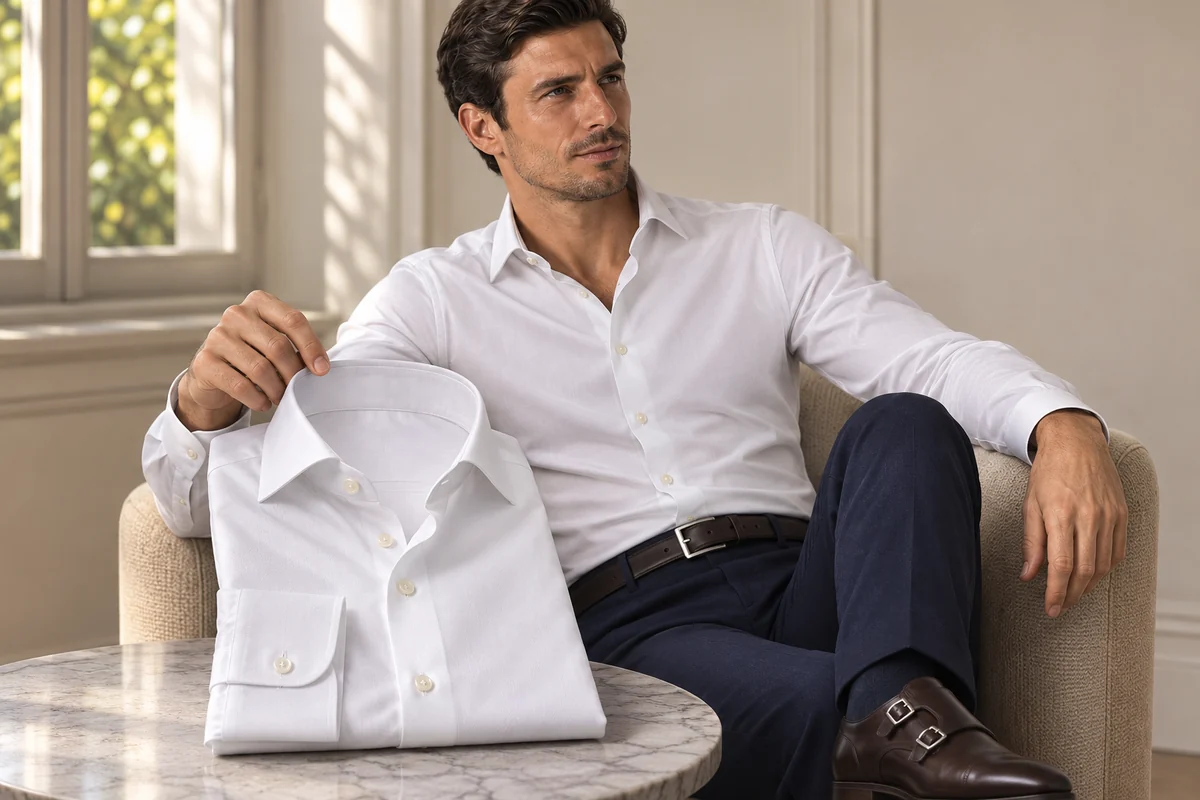
- Office and formal occasions: poplin or a fine twill in white or light blue.
- Daily wear and travel: twill or Oxford, which forgive creases.
- Hot weather: lightweight poplin.
- Weekends and smart casual: Oxford, especially with a button-down collar.
- If you hate ironing: choose texture, an easy-care finish, or a knit.
How Standheld shirts differ
The three fabrics above are woven. Standheld shirts are knitted from long-staple cotton with stretch, so they feel soft against the skin, and knitted fabrics generally crease less. If you are weighing up woven options, our guide to ironing a dress shirt explains what each needs, and you can see the knitted non-iron shirts for comparison.
Care for each fabric
All three are usually cotton and can be washed warm, but follow the label, as our guide to laundry care symbols explains. Poplin benefits most from careful drying and a quick press. Twill and Oxford can usually be tumble dried gently and hung straight away.
Frequently asked questions
What is the difference between poplin and twill?
Poplin is a plain weave: smooth, light and crisp, with a flat surface. Twill has a diagonal ridge, which makes it softer, more drapey and better at hiding creases, and usually a little heavier and more durable.
Is Oxford cloth formal or casual?
Oxford is the more casual of the three. Its basket weave gives a textured, slightly heavier fabric, and it is the classic fabric for the button-down collar. It can be dressed up, but it is at its best in smart-casual outfits.
Which shirt fabric wrinkles the least?
Twill generally hides creases better than poplin, and Oxford hides them better than poplin too thanks to its texture. Poplin tends to show creases most clearly. Easy-care finishes reduce them in all three.
Which is best for hot weather?
Lightweight poplin is the most breathable and the lightest on the skin, so it suits hot weather. Heavier Oxford and twill feel warmer.
What is pinpoint Oxford?
Pinpoint is a finer, smoother version of Oxford with a tighter weave. It sits between Oxford and poplin: more refined than ordinary Oxford, with a little more texture than poplin.
Does the weave affect how often I need to iron?
Yes. Poplin needs ironing most often, because the smooth surface shows every crease. Twill and Oxford forgive more. Washing and drying carefully matters for all of them.
Are knitted shirts the same as woven ones?
No. Woven fabrics such as poplin, twill and Oxford are made by interlacing threads. Knitted fabrics are made from interlocking loops, which gives stretch and a softer feel, and they usually crease less.