How to Dry and Smooth Trousers, Chinos and Jeans (and Dry Shoes) on an Automatic Ironing Machine
22 October 2026 · 7 min read
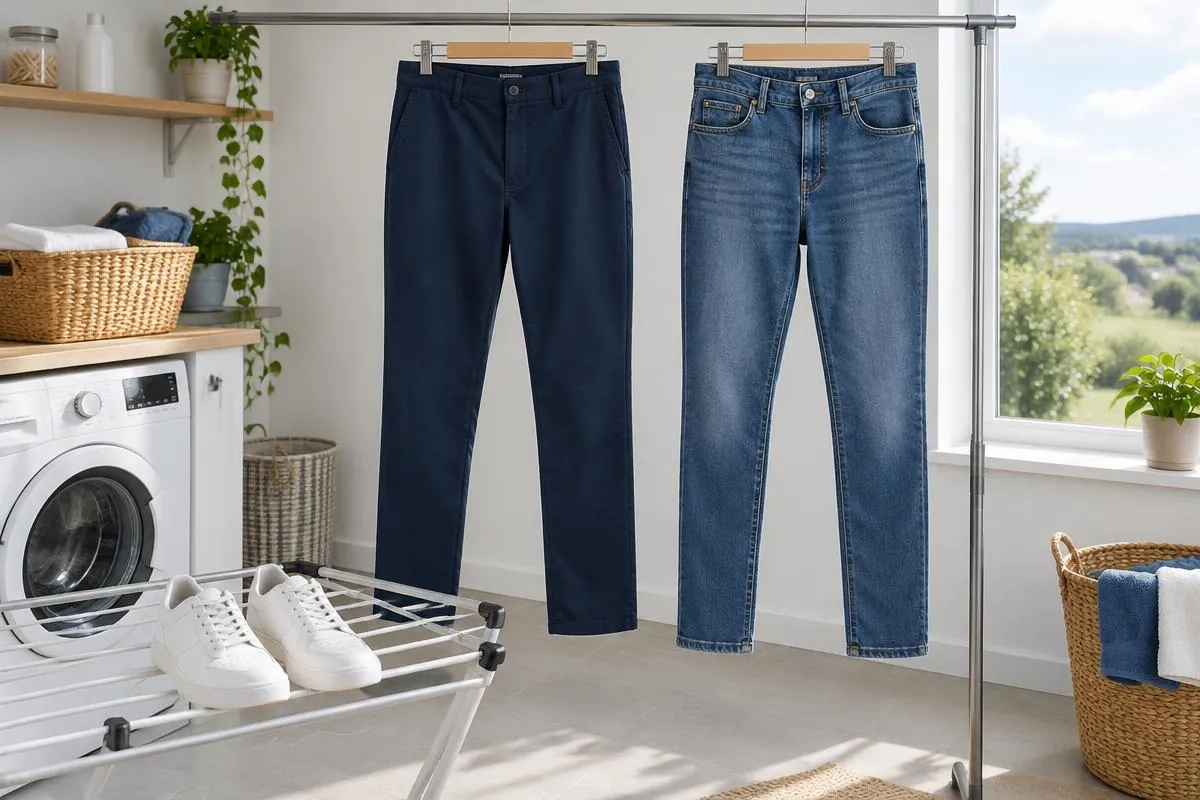
Key takeaways
- Trousers go on the trouser attachment upside down, waist at the bottom, straight from the spin cycle.
- Suit trousers and chinos come out smooth; a sharp front crease still needs an iron. Jeans take the longest because the denim is heavy.
- Shoes are dried, not ironed: take out the insoles, loosen the laces and use a lower temperature for leather and glued soles.
- Choose the temperature by fabric and follow the care label. The Standheld’s highest setting is 70 °C.
- The trouser attachment and the shoe-drying stand are both included in the Standheld Complete Set.
Most people buy an automatic ironing machine for shirts. Then they find out what it does for everything else: trousers that would otherwise crease on a radiator, jeans that take a day to dry on an airer, and trainers still wet from the morning run. Here is how to do each one properly, using the trouser attachment and the shoe-drying stand that come with the Standheld Complete Set.
Before you start
- Check the care label. It tells you the maximum temperature the fabric can take. Choose a setting below it.
- Use a normal spin. Damp is good; dripping makes the cycle longer.
- Empty the pockets and close zips and buttons.
Suit trousers and chinos
- Swap the form. Take off the shirt form and fit the trouser attachment on the machine.
- Put the trousers on upside down, waist at the bottom around the attachment, legs pointing up. Do up the button and zip so the waist is closed.
- Straighten the legs and line up the side seams. Smooth the pockets flat inside.
- Choose temperature and time. For cotton chinos, a higher setting; for wool blends and synthetics, a lower one. Start with around 10 to 15 minutes and add more if the waistband is still damp.
- Start the cycle. Warm air fills both legs and the fabric dries smooth.
What to expect: smooth, wrinkle-free legs without the creases you get from drying folded. What not to expect: a sharp, pressed front crease. If your suit trousers need one, dry them on the machine and refresh the crease with a few strokes of the iron. That takes a minute instead of ten.
Jeans
Denim is heavy and holds a lot of water, so jeans take longer than anything else. Turn them right side out, fit them the same way as other trousers, and give them a longer cycle at a higher temperature if the label allows. The waistband, pockets and seams dry last: feel them before you take the jeans off and add a few minutes if needed. Jeans come out dry and relaxed, without the stiff, cardboard feel of a pair left on an airer.
Raw or selvedge denim and stretch jeans with a high elastane content are worth treating gently: use a lower temperature and a longer time.
Trainers and shoes
The shoe-drying stand holds a pair of shoes on two arms in the warm air coming up from the machine. It dries them; it does not iron or reshape them. It is the most useful thing in the box after a wet commute, a run in the rain or a muddy walk.
- Brush off mud and wipe the outside.
- Take out the insoles and dry them separately, flat. They hold most of the water.
- Loosen the laces and open the tongue so the air reaches the toe.
- Fit the stand on the machine and put one shoe on each arm.
- Choose a low to medium temperature and a moderate time. Check, and add time if the toes are still damp.
Running shoes and canvas trainers dry well. For leather shoes, use the lowest warm setting and a short time, then stuff them with paper while they finish cooling so they keep their shape. Do not use high heat on leather or suede, and follow the maker's advice for shoes with glued soles.
Other things that go on the machine
- T-shirts and polos on the shirt form: they come out smooth, not stiff.
- Jumpers: lower temperature; knitwear dries without the hanger bumps on the shoulders.
Common mistakes
- Leaving the waist open. If the button and zip are undone, the air escapes through the waistband and the legs never fill. Close everything before you start.
- Twisted legs. If the side seams are not lined up, the legs dry with a twist. Take ten seconds to straighten them.
- Bunched pockets. Pockets dry in the shape they are in. Pull them flat inside the leg.
- One long cycle for everything. A pair of chinos and a pair of heavy jeans need different times. Start short and add minutes; it is easier than finding a pair that has been running far longer than needed.
- Skipping the label. The care label is the limit, not a suggestion. If it says low heat, use the low setting even if it takes a little longer.
Which set do you need?
The Standheld Shirt Set is for shirts, T-shirts and polos. The Complete Set adds the trouser attachment and the shoe-drying stand, so the one machine handles shirts, trousers and shoes. Both include the Hem Anchors and the Atomiser.
| Shirt Set (£129.90) | Complete Set (£159.90) | |
|---|---|---|
| Shirts, T-shirts, polos | Yes | Yes |
| Trousers, chinos, jeans | No | Yes, trouser attachment |
| Drying shoes | No | Yes, shoe-drying stand |
| Hem Anchors and Atomiser | Yes | Yes |
Comparing with other brands? Check whether the trouser and shoe pieces are included or sold separately: see our 2026 comparison. For collars, cuffs and cotton shirts, read our honest answers.
Frequently asked questions
Will trousers shrink on an automatic ironing machine?
They are dried with warm air while held stretched on the form, and the highest Standheld setting is 70 °C. Use a lower setting for wool blends and synthetics, follow the care label, and do not leave a finished pair running for hours.
Does it put a crease in suit trousers?
No. It dries and smooths the legs, but it does not press a sharp front crease. Many people dry them on the machine and then refresh the crease with a few strokes of an iron, which is much quicker than ironing the whole pair.
How long do jeans take?
Longer than a shirt, because denim holds more water. Start with a longer cycle at a higher temperature for cotton denim and add time if the waistband or pockets are still damp.
Can I dry leather shoes?
Use the lowest warm setting and a short time, remove the insoles, and stuff them with paper afterwards to keep their shape. Do not dry leather or suede at high heat: follow the maker’s care advice.